English · Bahasa Melayu · 中文
Semesta is a free gravity and space simulator you can play in your browser. Drop planets into orbit, throw comets past the Sun, pile up mass until a star ignites, and watch stars swell, explode and collapse into black holes. Everything moves by real Newtonian gravity.
It is made for curious students and their teachers, with 8 guided missions for SPM Physics (Form 4, Gravitation), and it works in English, Bahasa Melayu and 中文.
No sign-up, no download. Works on phones, tablets and computers.
What you can do in Semesta
- Build your own solar system. Tap to drop a planet into orbit, or drag to throw it and watch gravity bend its path.
- Grow worlds. Asteroids merge into planets, gas giants, brown dwarfs and finally stars.
- Watch stars live and die. Sun-like stars end as white dwarfs; heavy stars explode as supernovae and leave neutron stars or black holes.
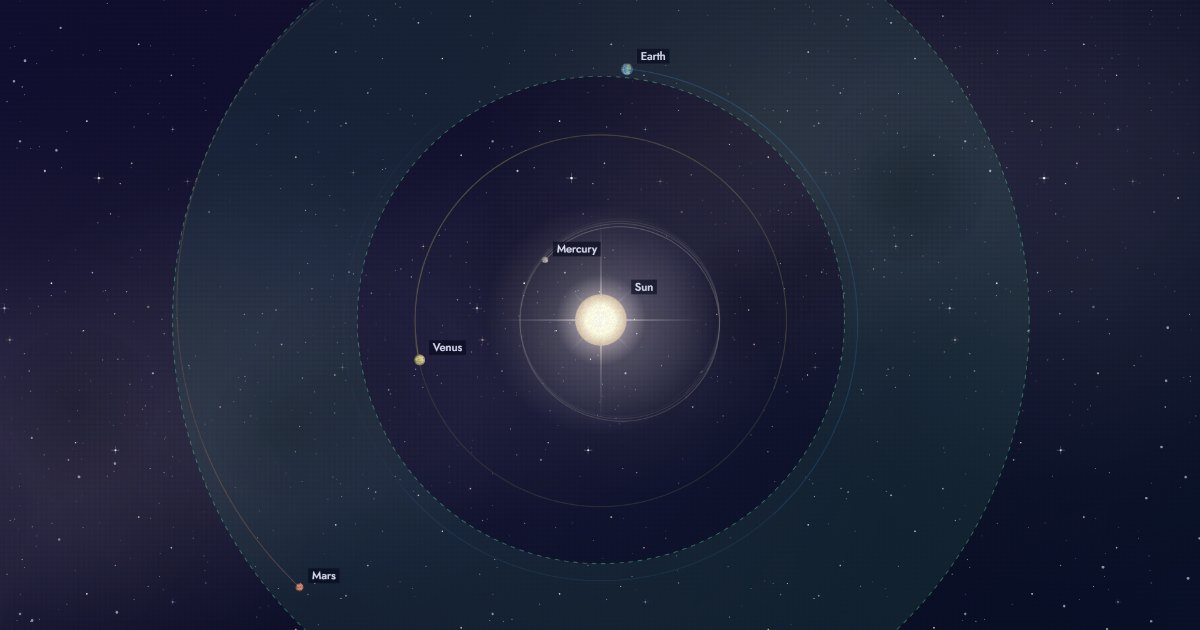
- Explore the real Solar System, built from NASA orbital data with the planets placed where they are today.
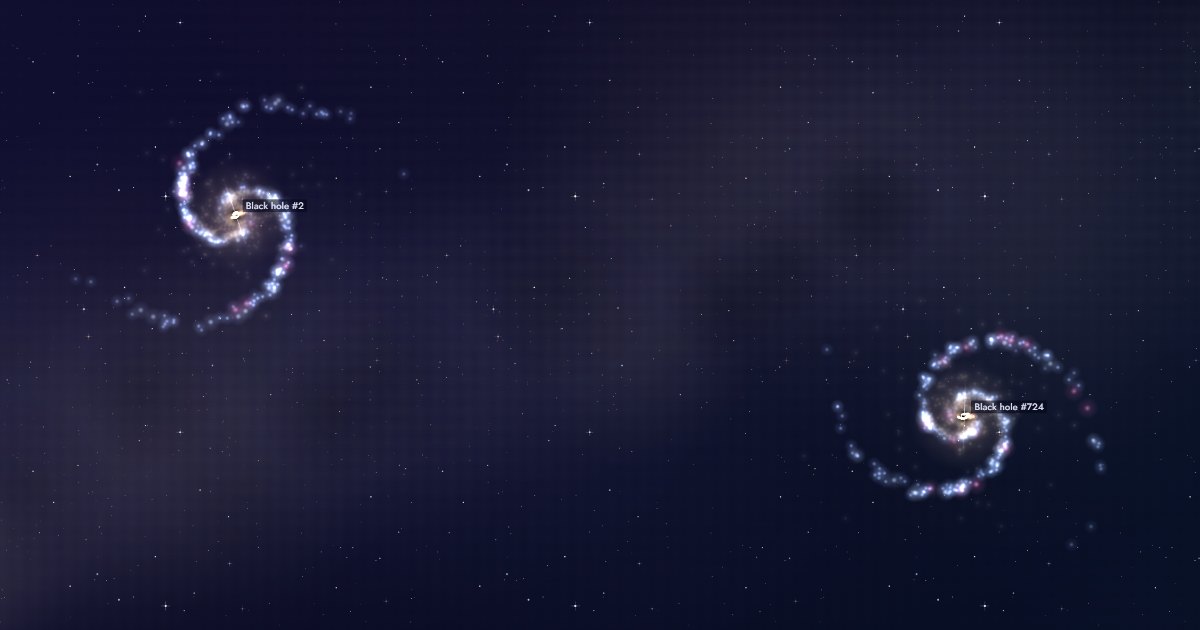
- Collide galaxies, switch off dark matter, and see why galaxies need it.
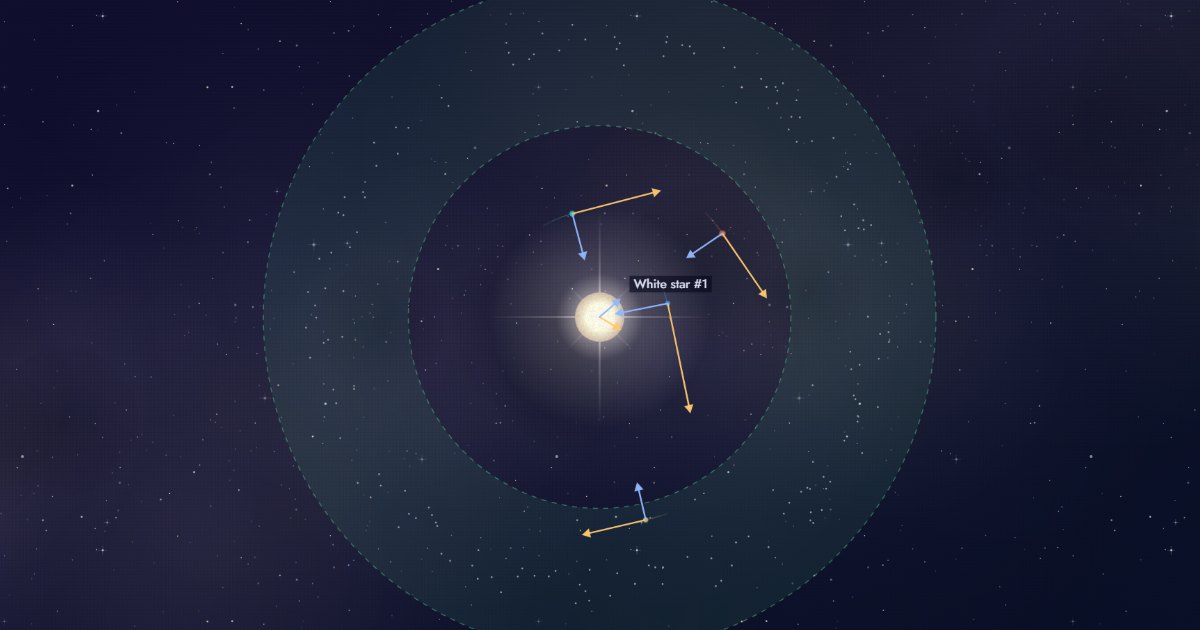
- Turn on learning layers: velocity and gravity arrows, Kepler’s equal-area sweeps, the habitable zone, Lagrange points and live energy graphs.
How to play
- Pick a scenario from the menu at the top, such as Solar system, Death of a Sun-like star or Colliding galaxies.
- Choose what to add at the bottom (comet, asteroid, planet, gas giant, brown dwarf, star or black hole).
- Tap empty space to drop it into orbit, or drag to throw it. The dotted line shows where gravity will take it.
- Use the speed buttons to fast-forward time, and open Layers to switch on arrows, orbits, zones and graphs.
8 missions
Each mission teaches one idea. Solve it efficiently to earn up to 3 stars.
- Catch a moon: circular orbits and orbital speed, v = √(GM/r).
- Stretch it: elliptical orbits and Kepler’s first and second laws.
- Double time: Kepler’s third law, T² ∝ r³.
- Break free: escape velocity, v = √(2GM/r).
- From dust to darkness: how mass decides a star’s fate.
- Sungrazer: comet orbits and why tails point away from the Sun.
- Lord of the rings: the Roche limit and how planetary rings form.
- Trojan parking: Lagrange points L4 and L5.
For teachers
Missions 1 to 4 follow SPM Physics Form 4, Chapter 3 (Gravitation): circular orbits and Newton’s law of gravitation, Kepler’s laws, and escape velocity for satellites. Share a mission link and your students land straight in it, with no login.
In the app, Layers → How this simulation simplifies reality lists what is simplified (compressed time, 2D motion, game mass units). It makes a good discussion starter: what would change in the real universe?
Frequently asked questions
Is Semesta free?
Yes. Semesta is completely free, with no sign-up and nothing to download. It runs in your web browser.
Does it work on phones and tablets?
Yes. It works on phones, tablets and computers. Tap the full-screen button in the app for the best experience on a phone.
Is the physics accurate?
Bodies move by real Newtonian gravity, and star lifetimes follow the real mass rule. Some things are simplified so you can see them in minutes: time is compressed, everything moves in 2D, and sizes are enlarged. In the app, open Layers and tap “How this simulation simplifies reality” for the full list.
Which languages are available?
English, Bahasa Melayu and 中文 (Simplified Chinese). Switch any time with the language menu in the top-right corner.
Can teachers use it in class?
Yes. Every mission has its own link, so you can share one with your class and students land straight in it. No login is needed, and it works on a projector.
Who made Semesta?
Semesta was made in Malaysia by Dylan Goh. “Semesta” is the Malay word for universe.
Made in Malaysia by Dylan Goh.